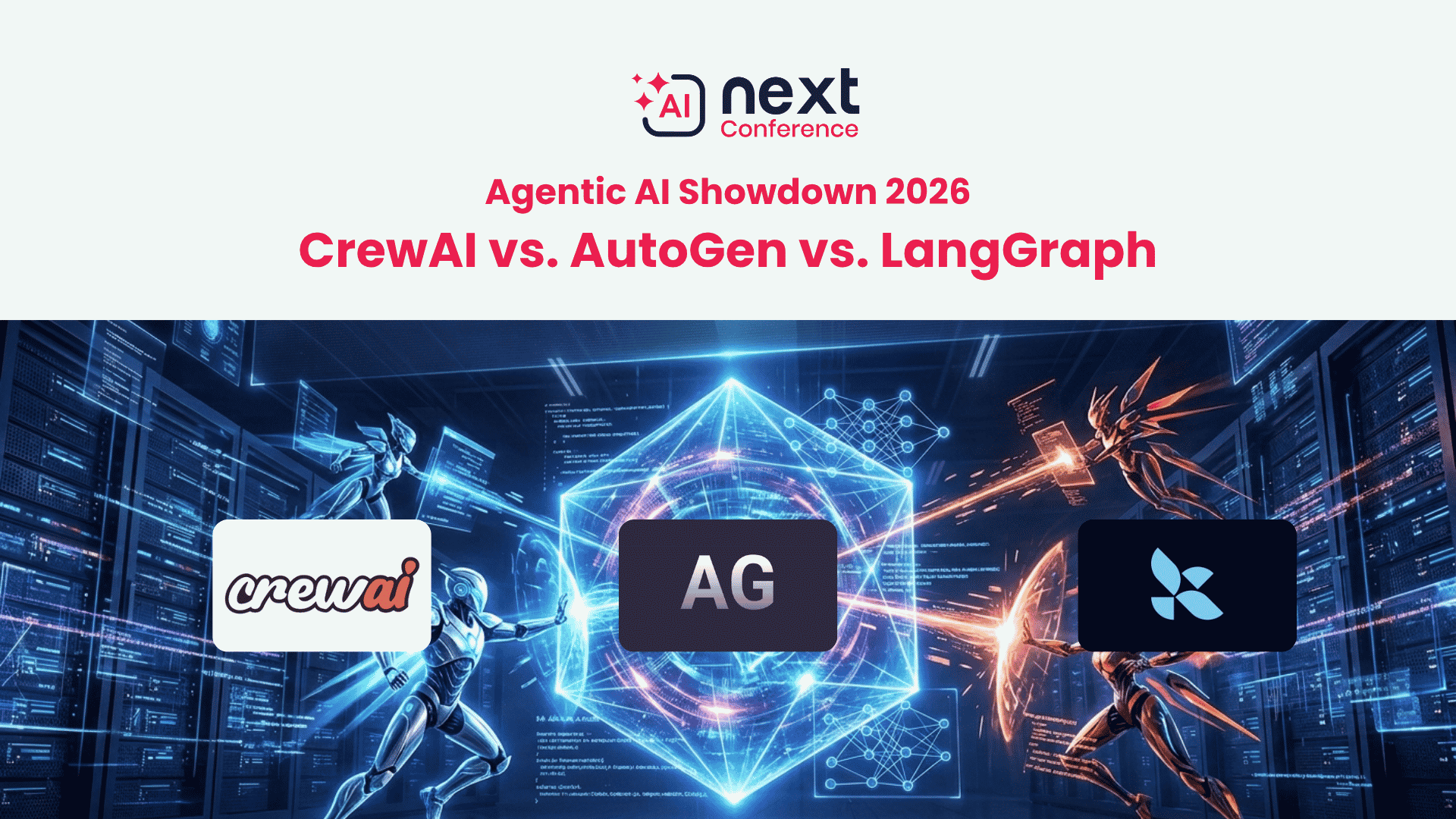
As we settle into 2026, the question for developers has shifted from Can AI perform this task? to How do I architect the workforce that executes it? Choosing a framework is no longer just a technical decision; it is an act of organizational design, effectively defining the management style and operational DNA of your AI team.
1. CrewAI: The Project Manager Approach
Philosophy: Role-based agents working like a structured company—Researcher, Writer, QA, and so on.
Best For: Process-driven workflows like content marketing, reporting, and analysis.
Edge: Highly human-readable. Define a Crew, assign Tasks, and execution flows naturally.
In 2026, the Manager Agent takes this further—automatically assigning the right agent to each sub-task, turning complex pipelines into a well-orchestrated team.
2. AutoGen (Microsoft): The Open Discussion Approach
Philosophy: Agents collaborate through conversation—debating, iterating, refining—often in an AutoGen-style, dialog-driven setup.
Best For: Coding, debugging, and research-heavy tasks.
Edge: Extreme flexibility. Agents can challenge each other, simulate peer review, and improve outputs dynamically.
3. LangGraph: The Architect’s Approach
Philosophy: Graph-based orchestration with full control over states, loops, and memory.
Best For: Enterprise-grade, mission-critical systems.
Edge: No black boxes. Perfect for human-in-the-loop workflows with approvals and rollback control, and audit-ready traces.
The 2026 Shift: From Coding to Architecting
We have entered the era of Vibe Coding, where natural language replaces boilerplate syntax to define agentic workflows, and frameworks compile intent into executable logic with minimal hand-written code. As intent-driven tooling matures ,the barrier to entry has vanished.
However, this democratization changes the developer’s role: when implementation is effortless, architectural design—the logic of flow, state management, and error handling—becomes your only true competitive advantage.
The Sovereign Edge: Why Local AI Wins
In 2026, Sovereign AI is rapidly becoming the default expectation for regulated and data-sensitive industries .It means full autonomy, no third-party servers risking data leakage or API hikes.
Why it matters:
Data Gravity: For industries like Finance and Defense, moving massive datasets to the cloud for AI processing is too slow and legally risky. Sovereign AI brings the model to the data.
Predictable Performance: By running local stacks, developers avoid latency spikes and the unpredictable model drift often seen in public LLM updates.
Cost Efficiency: While the initial hardware (or private cloud) setup is an investment, the long-term cost per agent-action is significantly lower than paying per-token on public models.
The Sovereign Stack Blueprint
Worker Intelligence: Use SLMs (e.g., Phi-4, Mistral edge) to run specialized roles locally, maximizing privacy and speed.
Local Orchestration: Deploy Ollama or vLLM as your primary local inference engine to manage agent communication without third-party API exposure.
Edge Memory: Implement Chroma or Qdrant locally to provide agents with persistent, long-term context that never leaves your infrastructure.
The Strategic Shift
The real competitive advantage in 2026 belongs not to the organization with the largest cloud bill, but to the one that owns its weights, graphs, and data flows end‑to‑end. By pairing LangGraph’s architectural precision with a Sovereign AI infrastructure, you transform transient AI processes into immutable, high‑value corporate assets.
The Final Verdict: Choosing Your Framework
There is no one-size-fits-all winner in this showdown, only the right tool for your specific operational philosophy:
CrewAI: For organizations that thrive on structured, role-based workflows.
AutoGen: For teams requiring dynamic, iterative collaboration and peer review—style refinement.
LangGraph: For enterprise applications where mission-critical precision and state control are non-negotiable.
Join Us at AINext Conference 2026
The real competitive advantage lies at the intersection of your chosen framework and sovereign autonomy. At AINext 2026, we are bringing this shift to life—from live vibe coding workshops to architecting sovereign agent stacks. Join us to build systems that aren't just intelligent, but owned—not rented.