
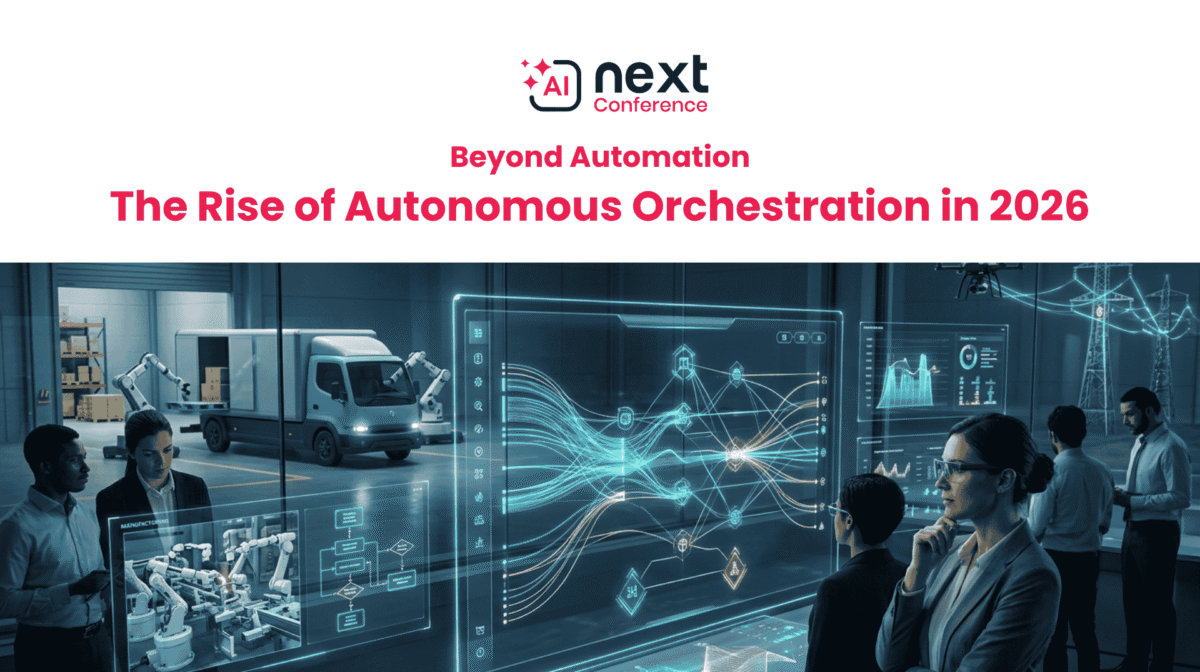
Beyond Automation: The Rise of Autonomous Orchestration in 2026
For decades, industrial automation was synonymous with dark factories—fenced-off machines performing repetitive tasks in isolation. But as we navigate 2026, the paradigm has shifted. Today, the most competitive manufacturers aren’t just running factories; they are orchestrating autonomous learning systems.
The secret to this shift lies in the synergy between two powerhouse technologies: AI-powered CoBots and Digital Twins.
1. The Digital Twin: Factory’s Cognitive Brain
Digital twins have advanced from static 3D models to cognitive twins that learn and adapt in real time. They replicate the full physical supply chain—from raw materials to shipping—enabling millions of what-if simulations without risking assets.
Predictive Maintenance: AI monitors equipment health, slashing unplanned downtime by 20–40%.
Virtual Commissioning: Test layouts on platforms like NVIDIA Omniverse or Siemens Tecnomatix before physical builds.
Real-Time Optimization: Cut logistics costs by 15% and boost delivery speed by 9% in distribution hubs.
2. AI-Powered CoBots: Agile Workspace Arms
While Digital Twins think, CoBots act. In 2026, these collaborative robots deliver industrial-grade performance for heavy assembly and precision welding alongside humans.
Safety by Design: Advanced sensors and force-limiting tech enable cage-free collaboration.
Autonomous Learning: Leaders like ABB and Universal Robots use Generative and Agentic AI for gesture- or language-based task training—no rigid coding needed.
Mobile Manipulation: Autonomous Mobile Manipulator Robots (AMMRs) navigate floors for material transport and on-the-fly inspections.
3. The Convergence: Self-Healing Supply Chains
When these technologies merge, the entire supply chain becomes a self-healing ecosystem.
Scenario Sensing: A digital twin detects a disruption (e.g., a port delay or raw material shortage).
Autonomous Re-routing: AI agents within the twin instantly simulate new logistics paths and adjust production schedules.
Physical Execution: On the shop floor, CoBots receive the updated instructions and automatically reconfigure their tasks—rebalancing the workload between humans and machines to maintain throughput.
2026 Impact by the Numbers
Early adopters report:
• 61% higher revenue growth with strong AI investment.
• 25–30% factory productivity gains.
• 28% energy reductions through real-time optimization.
The Human Element: Operators to Orchestrators
The competitive edge has shifted: it’s no longer about operating machines, but orchestrating intelligence.
In 2026, automation isn’t a replacement—it’s an upgrade. As AI handles routine logic, the workforce evolves into Systems Orchestrators and Robot Managers, focusing on high-level strategy, ethical oversight, and complex exceptions.
The future of manufacturing isn’t just automated; it’s orchestrated. Ready to build your self-optimizing ecosystem?
AINext Conference 2026 Spotlight
AINext Conference 2026: A premier global summit on enterprise AI deployment and agentic systems, hosted by Next Business Media.
Date: May 21–22, 2026
Venue: Horseshoe Las Vegas, Las Vegas, USA
Key Themes: Agentic AI, enterprise transformation, ethical governance, AI experimentation to “Agentic Reality”
Core Highlights:
Keynotes: Visionaries on autonomous orchestration and cognitive twins.
Workshops: Hands-on sessions on CoBot integration and Digital Twin deployment.
Networking: Connect with global innovators and early adopters.





 Reach us on WhatsApp
Comments (3)
Nathaniel365 April,22 2026
https://shorturl.fm/LmyJ8
Gwendolyn3775 April,23 2026
https://shorturl.fm/kmMka
Addison1638 April,23 2026
https://shorturl.fm/MqxKl