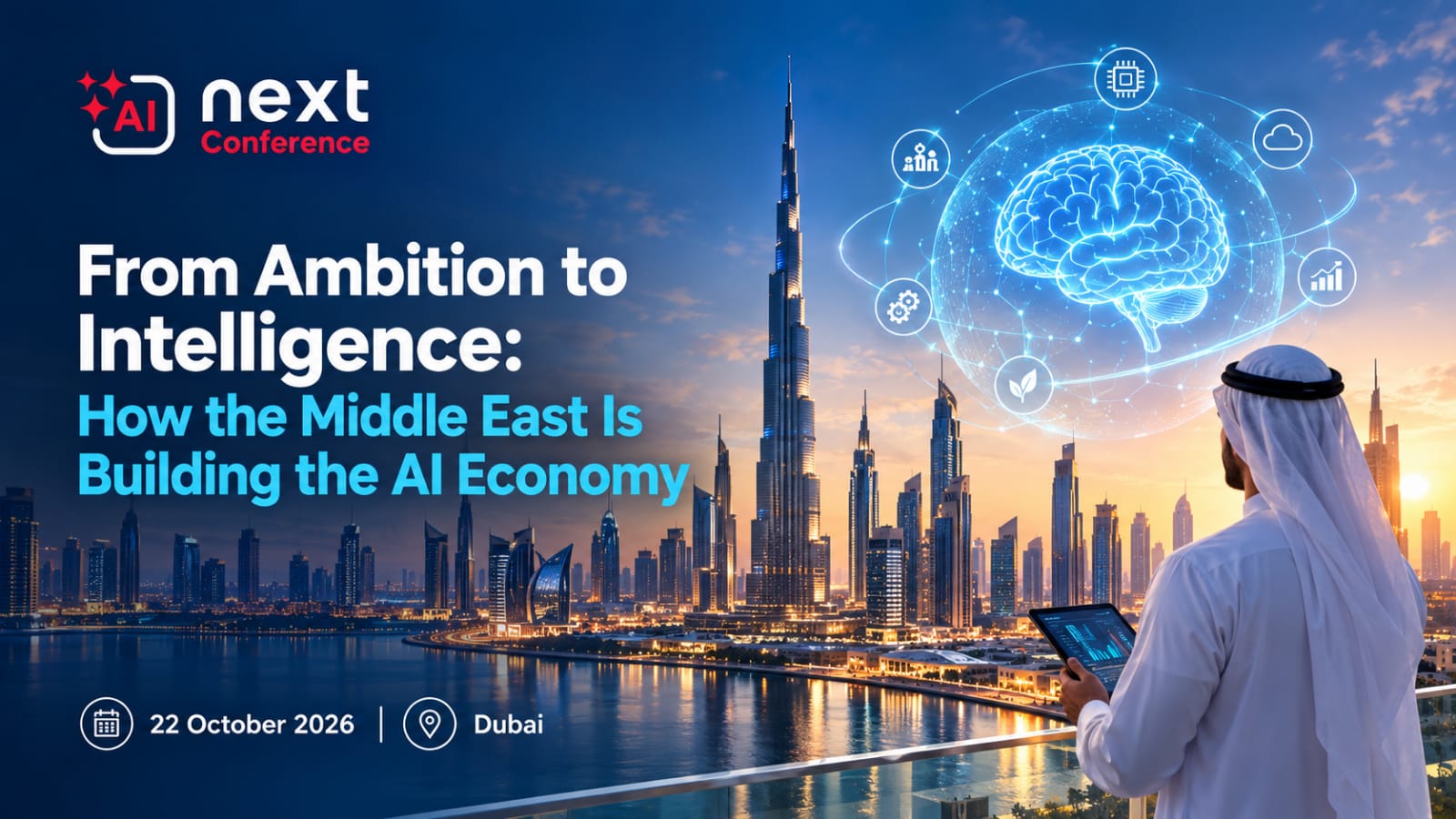
The Middle East is entering a new phase of artificial intelligence development. Governments across the region are no longer treating AI as an experimental technology. They are positioning it as a foundation for economic diversification, infrastructure development, public-sector transformation and global competitiveness.
The UAE has been among the region’s earliest and most visible AI adopters. Its National Strategy for Artificial Intelligence 2031 aims to make the country a global leader in AI while developing capabilities across areas including infrastructure, talent, governance and public-sector adoption. The strategy identifies resources and energy, logistics and transport, tourism and hospitality, healthcare, and cybersecurity among its initial priority sectors.
Dubai’s AI ambitions are part of a wider regional transformation. Saudi Arabia, Qatar, Bahrain, Kuwait and Oman are also developing AI strategies, digital infrastructure and innovation ecosystems. Together, these initiatives reflect broader efforts to diversify economies beyond hydrocarbons and build new capabilities around data, automation, advanced computing and digital services.
Building the compute economy
AI development depends on more than software. It requires data centers, high-speed connectivity, advanced chips, cybersecurity and reliable electricity.
The Gulf is therefore investing heavily in AI infrastructure. Large-scale projects are emerging across the region as governments and technology companies seek to expand access to high-performance computing and cloud infrastructure.
The UAE is developing major AI infrastructure through projects such as Stargate UAE, a planned 1GW AI infrastructure cluster in Abu Dhabi involving G42, OpenAI, Oracle, NVIDIA, Cisco and SoftBank. OpenAI said 200MW of the planned capacity was expected to go live in 2026.
Microsoft and G42 are also expanding UAE data-center capacity through Khazna Data Centers, with a planned 200MW increase expected to begin coming online before the end of 2026. The expansion is intended to support cloud and AI workloads for government organizations, regulated industries and businesses.
These investments could support applications across finance, healthcare, logistics, manufacturing, smart cities and public administration. They also give the region greater capacity to shape how AI is developed and deployed.
The Arabic AI opportunity
A particularly important opportunity lies in Arabic-language AI.
Many leading AI systems have been trained primarily on English and other widely represented languages. Arabic presents additional challenges because of its diverse dialects, complex grammar and differences between formal and spoken communication.
Developing stronger Arabic-language models could improve digital access for millions of people. Banks, hospitals, schools and government agencies could offer more natural and locally relevant AI services. Businesses could also use these systems for customer support, translation, education and knowledge management.
This opportunity will require high-quality regional datasets, advanced research and cooperation between governments, universities and technology companies. The goal is not simply to import AI systems, but to develop models that better understand the region’s languages, cultures and institutions.
Infrastructure, energy and talent
AI expansion also creates pressure on energy and water systems. Data centers require large amounts of electricity and cooling, while the region already faces extreme heat and water scarcity. AI infrastructure must therefore be developed alongside renewable energy, efficient cooling, smart grids and improved water management.
Talent will be equally important. The region needs engineers, researchers, entrepreneurs, cybersecurity specialists and AI-literate business leaders. Training government employees and reskilling workers can help ensure that AI adoption extends beyond a small group of technical experts.
From ambition to execution
The Middle East is moving from AI strategies and pilot projects towards large-scale implementation. Its success will depend on whether AI can generate measurable productivity gains, create new businesses, improve public services and expand opportunity.
The region does not need to copy Silicon Valley. It can develop a distinctive model based on sovereign investment, regional infrastructure, Arabic-language innovation, public-sector adoption and long-term planning.
AINext Dubai offers a timely platform to explore this transformation. The central question is no longer whether the Middle East will participate in the AI economy. It is how sustainable, inclusive and globally influential that economy will become.