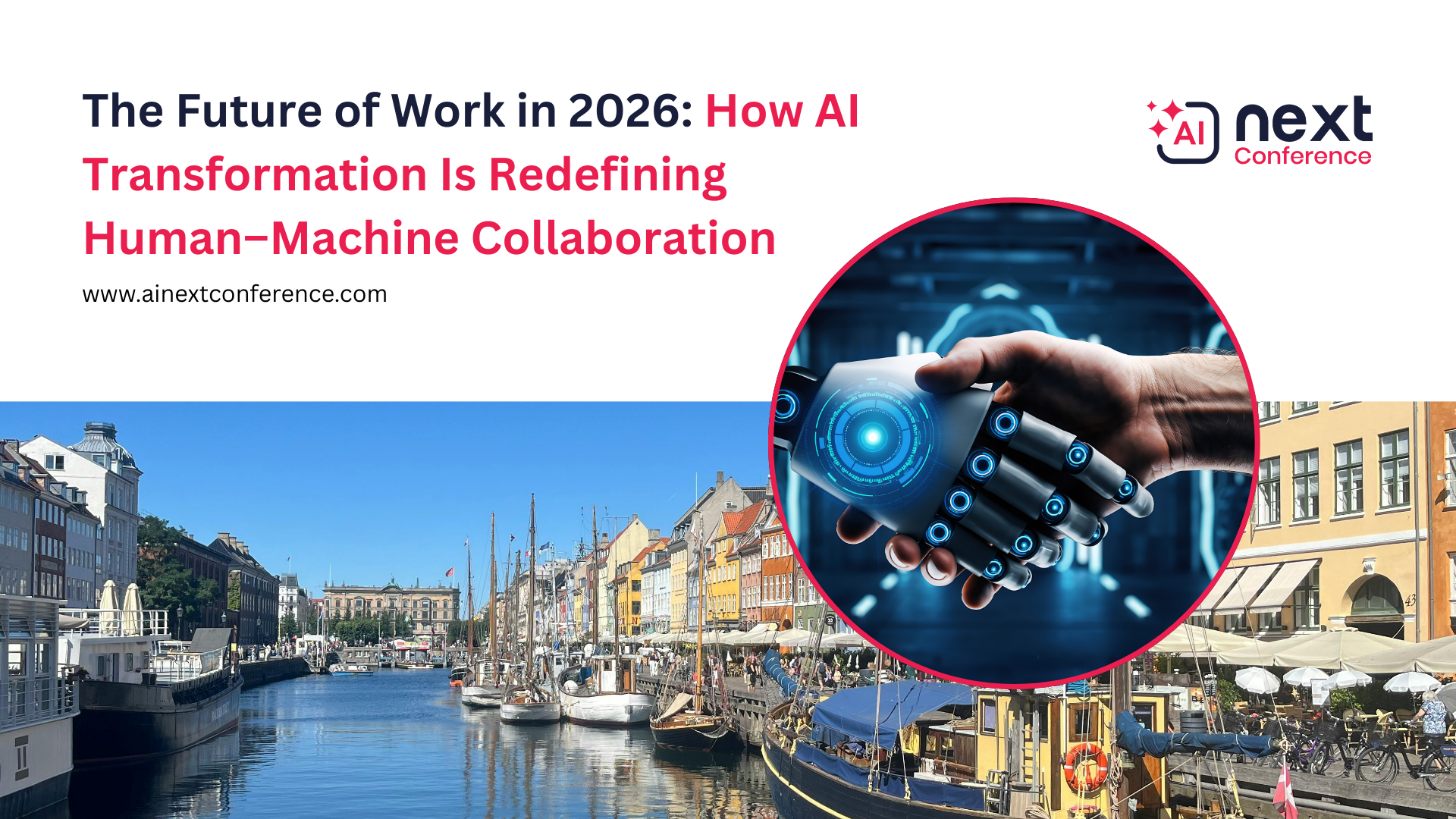
AI is no longer just automating tasks—it is reshaping how organizations operate, collaborate, and grow. As we move deeper into 2026, the future of work is being defined by AI transformation, where intelligent agents work alongside humans to enhance productivity, decision-making, and employee experience.
These shifts will take center stage at AINext 2026 in Las Vegas, where global leaders will explore how agentic AI, workforce strategies, and enterprise integration are changing work at its core.
Agentic AI: From Tools to Digital Teammates
Agentic AI is rapidly evolving from a support tool into a collaborative digital teammate. According to Cisco’s vision of Connected Intelligence, AI systems are expected to work alongside humans and other AI agents by 2026—coordinating workflows, sharing context, and enabling real-time collaboration across teams. This shift moves AI beyond isolated automation toward a connected ecosystem where humans and intelligent agents jointly manage tasks such as meeting summaries, translations, and decision recommendations. These developments align closely with the agentic AI discussions planned at AINext 2026, where leaders will explore how to operationalize human–AI collaboration at scale.
Productivity Gains Without Mass Displacement
AI transformation is already delivering measurable productivity gains. Research from European firms shows that AI adoption increases labor productivity in the short term—primarily through capital deepening, not large-scale job displacement. Workers in AI-enabled organizations often experience stable employment and, in many cases, higher wages.
For the future of work, this signals a critical shift: AI is changing how work is done rather than who does it. AINext sessions focused on AI economics and enterprise ROI will examine how organizations can scale these gains responsibly and inclusively.
Flatter Organizations and the Rise of Human-Centric Skills
As AI automates coordination-heavy tasks such as reporting, scheduling, and performance tracking, organizational hierarchies are flattening. Gartner predicts that by 2026, a significant share of companies will reduce middle-management roles that primarily exist to manage information flow.
In this new future of work, human skills become more—not less—valuable. Creativity, empathy, leadership, and strategic judgment emerge as premium capabilities, while AI copilots support talent management, learning, and performance insights. These shifts in organizational design and leadership models are key focus areas at AINext 2026.
Infrastructure, Security, and Trust in an Agentic World
AI transformation places new demands on enterprise infrastructure. Agentic systems require low-latency networks, edge computing, and intelligent automation—often referred to as AgenticOps—to enable self-healing IT environments.
At the same time, security and governance must evolve. As AI agents gain autonomy, trust, ethics, and transparency become non-negotiable. AINext 2026 will spotlight how enterprises can secure AI-driven operations while maintaining compliance, accountability, and human oversight.
Human Experience: Customer Engagement and Well-Being
The future of work is not only about efficiency—it is about experience. AI-powered brand concierge agents are transforming customer engagement by working seamlessly with human teams, offering real-time routing, personalization, and language translation.
Internally, AI is being used to monitor employee sentiment and workload patterns, helping organizations detect burnout risks early and design healthier workplaces. These human-centered applications of AI transformation reinforce the idea that technology should enhance—not exhaust—the workforce.
Conclusion: Preparing for the Future of Work
Organizations that thrive in 2026 will approach AI transformation strategically—investing not just in tools, but in training, workflow redesign, and inclusive policies. The future of work will belong to enterprises that balance automation with human judgment and innovation with trust.
AINext 2026 is where these conversations move from theory to action—bringing leaders together to shape a future where humans and AI agents collaborate, not compete.
Reference
BIS-AI adoption, productivity and employment: evidence from European firms