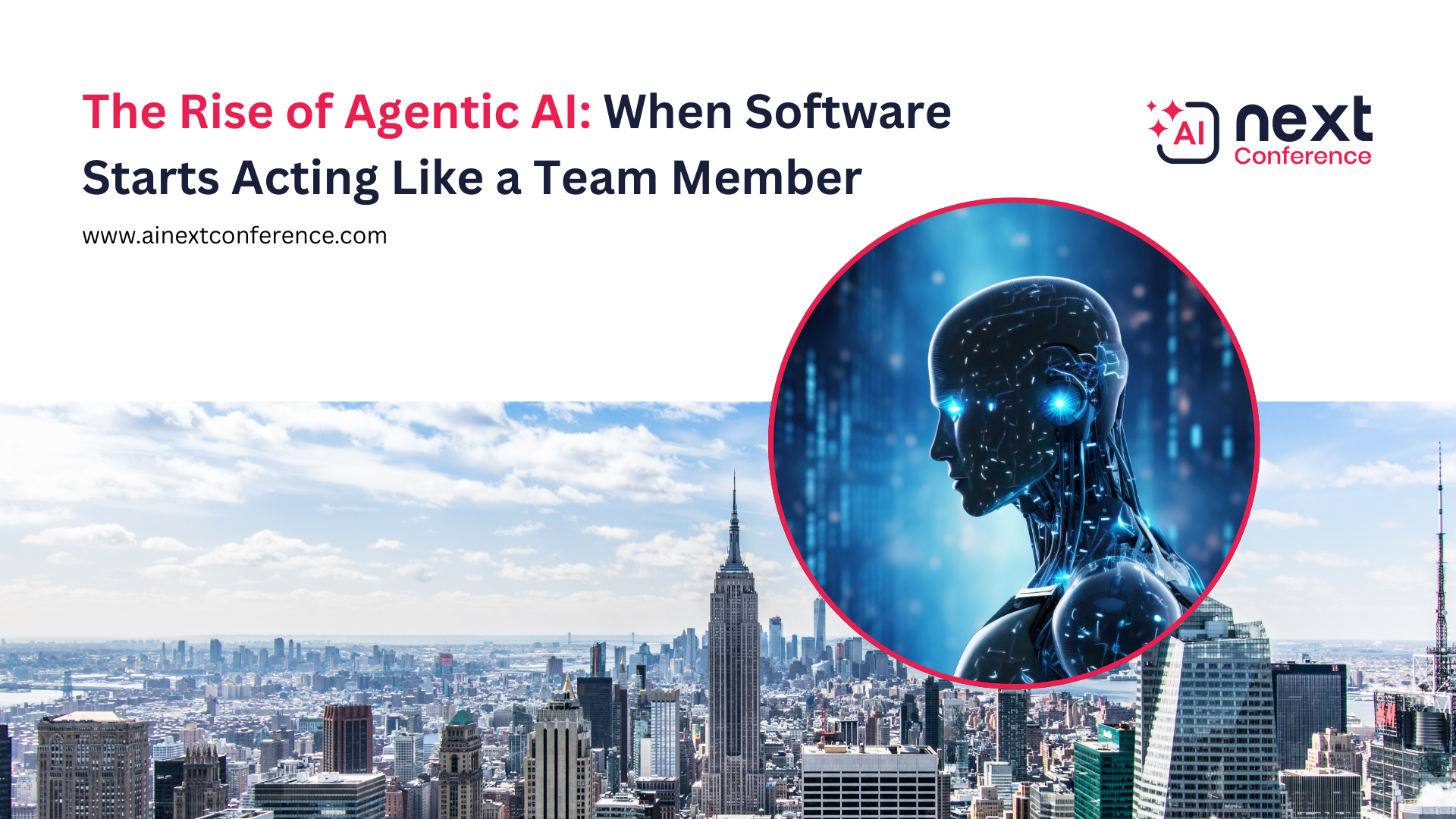
Artificial intelligence evolves rapidly from passive tools to active collaborators in business. Early systems automated repetitive tasks like data entry or scheduling. Now, Agentic AI emerges—systems that plan, decide, act, and learn autonomously to achieve goals, functioning like digital team members.
Let’s explore how Agentic AI moves from traditional automation to collaborative intelligence.
What Is Agentic AI?
Agentic AI operates with autonomy: it understands objectives, breaks them into sub-tasks, selects actions, and integrates with tools or other agents. For example, instruct it to “boost quarterly sales,” and it can gather data, analyze trends, launch campaigns via APIs, and track results—all with minimal human oversight.
From Automation to Agency
The evolution of AI can be seen in three stages:
Rule-Based Automation – Fixed logic and scripts performing predefined tasks.
Machine Learning AI – Systems that learn patterns from data but still require human direction.
Agentic AI – Systems that combine intelligence, memory, planning, and action.
What makes Agentic AI different is its ability to pursue goals, not just execute commands. This is what makes it feel less like software and more like a collaborator.
Key Capabilities of Agentic AI
Goal-driven: Evaluates paths to optimize outcomes.
Planning: Decomposes and adapts complex strategies.
Tool integration: Interfaces with databases, CRMs, and platforms.
Feedback learning: Refines via results and environments.
Collaboration: Agent teams handle research, execution, and review.
Real-World Use Cases
Operations: Dynamically manage supply chains and forecasts.
Customer service: Personalize resolutions across channels.
DevOps: Code, test, deploy, and monitor autonomously.
Sustainability: Track ESG metrics and optimize energy.
Pharma R&D: Analyze trials, flag risks, and support decision-making.
Organizational Benefits
Higher productivity through continuous, autonomous operation
Faster decision-making based on real-time data
Reduced operational costs by automating complex workflows
Greater adaptability in fast-changing markets
Improved consistency and accuracy
Risks and Challenges
Despite its promise, Agentic AI also introduces new risks:
Loss of human oversight if autonomy is poorly controlled
Bias and ethical concerns embedded in training data and decision logic
Security vulnerabilities if agents gain access to sensitive systems
Accountability gaps when AI decisions cause harm or failure
These challenges highlight the need for strong governance, transparency, and human-in-the-loop systems.
The Role of Humans in an Agentic World
Rather than replacing humans, Agentic AI shifts human roles toward:
Setting goals and values
Supervising and guiding AI behavior
Making strategic and ethical decisions
Handling complex judgment, creativity, and empathy-based tasks
Humans become managers of intelligence, not just operators of tools.
2026 Outlook
Multi-agent systems and enterprise platforms will dominate, per recent forecasts. Success will favor firms that build human-AI symbiosis to drive innovation.Agentic AI is redefining work—partner strategically to combine machine scale with human insight.
Explore Agentic AI at AINext 2026
Discover the forefront of Agentic AI at AINext Conference 2026, set for May 21-22 at Horseshoe Las Vegas, USA. Organized by Next Business Media,the event showcases AI-driven business transformation, breakthrough innovations, and hands-on tech demos. Attendees will explore case studies, witness awards celebrating AI excellence, and network with leaders, researchers, and innovators to see multi-agent collaborations in action—reshaping industries like pharma R&D and sustainability.
It’s the perfect opportunity to experience software as true collaborative teammates in enterprise workflows.