
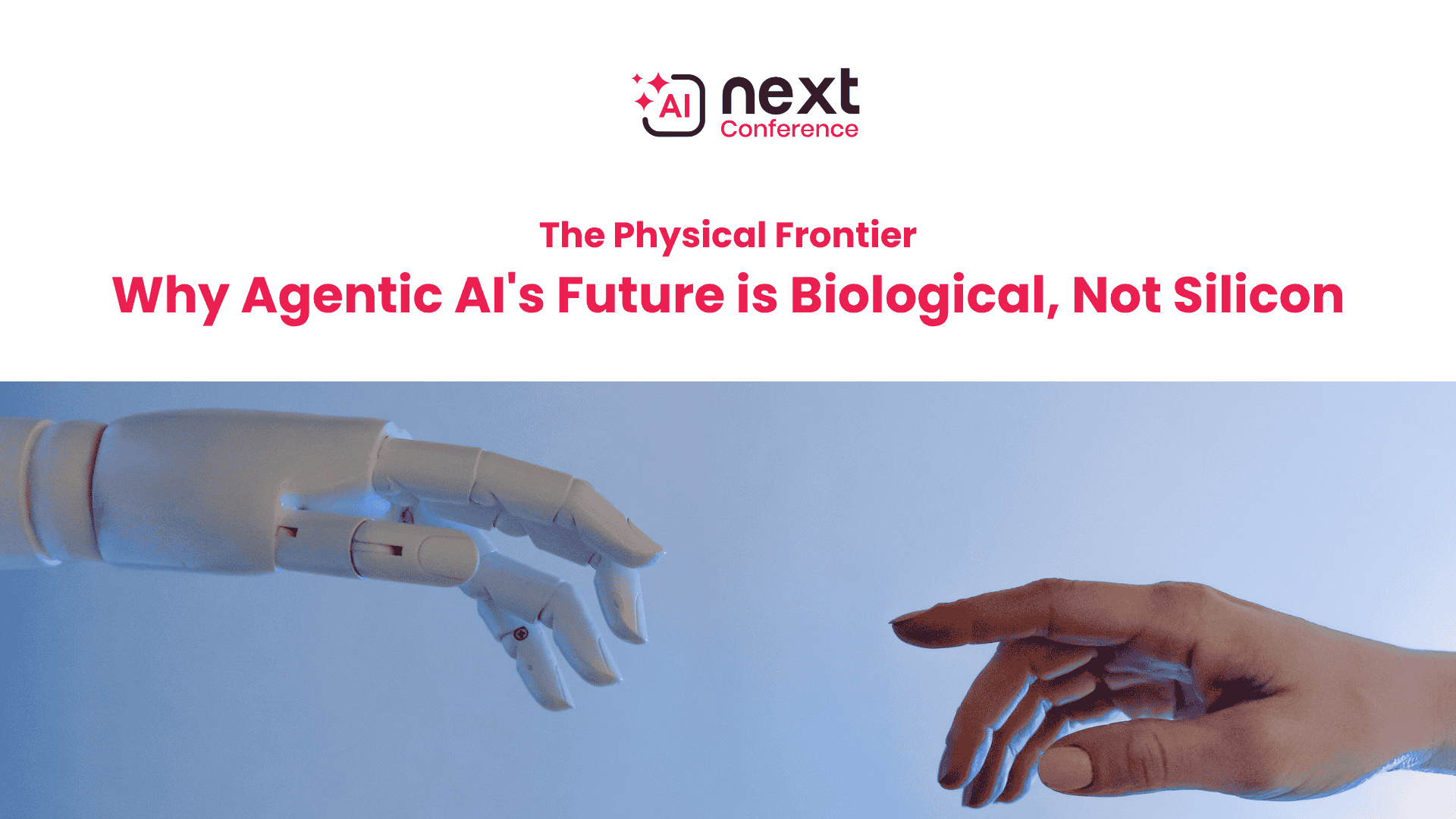
As AINext Conference 2026 approaches in Las Vegas, the spotlight is turning from silicon brains to resilient bodies. We've optimized AI models for years, but GPUs are slamming into thermal limits, guzzling power and risking a full stall. Enter the two technologies that will define the infrastructure of 2026: Neuromorphic Computing and DNA Data Storage.
1. Neuromorphic Computing: Brain-Like Efficiency at Life's Speed
Traditional AI hardware separates memory from processing, creating energy-intensive bottlenecks. Neuromorphic chips—like Intel’s Loihi 2 (up to 200× more efficient than GPUs for sparse tasks) and BrainChip’s Akida—fuse these functions, mimicking the brain’s 86 billion neurons.
Event-Driven Power Savings: These chips spike only on new inputs, like neurons firing on demand—slashing energy use by up to 1,000 times (per Intel benchmarks) and enabling always-on edge devices.
Edge Autonomy Unleashed: By 2026, neuromorphic chips are expected in medical wearables detecting real-time anomalies and in drones navigating swarms independently of the cloud, according to DARPA projections.
2. DNA Storage: The Internet in a Teaspoon
By 2026, the world’s data will far exceed our capacity to store it on magnetic tape or flash drives.Global data creation is projected to reach 175 zettabytes by 2025, according to an International Data Corporation forecast reported by Forbes.
DNA storage offers a radical solution:
Eternal Longevity: While a hard drive might last a decade, DNA can store data for thousands of years without degradation.
Unmatched Density: In theory, one gram of synthetic DNA could encode the entire internet’s data—making it millions of times denser than flash storage (Microsoft Research).
The Microsoft Connection: With projects like Microsoft's Molecular Information Systems Lab gaining momentum, 2026 marks the point where synthetic DNA moves from science fiction to a strategic enterprise backup solution.
3. The Convergence Layer: Where Biology Meets Compute
Individually, neuromorphic chips and DNA storage solve different bottlenecks. Together, they hint at a new computing stack:
Compute Layer (Neuromorphic)
Real-time, low-power decision-making at the edge
Memory Layer (DNA Storage)
Ultra-dense, long-term archival with near-zero energy cost
System Impact
AI systems that can learn locally, store indefinitely, and operate independently of centralized infrastructure
This convergence opens the door to:
• Autonomous environmental monitors for climate resilience.
• Self-contained intelligence for long-haul space missions.
• Regenerative agriculture systems storing decades of field data on-site (e.g., CRISPR-optimized crops adapting in real-time).
From Silicon Bottlenecks to Biological Resilience
Agentic AI—acting, adapting, deciding in the real world—demands efficiency silicon can't deliver. This bio-shift isn't incremental; it's life's blueprint for sustainable scale. At AINEXT 2026, dive into live demos, startup pitches, and roadmap talks powering tomorrow's autonomous edge.