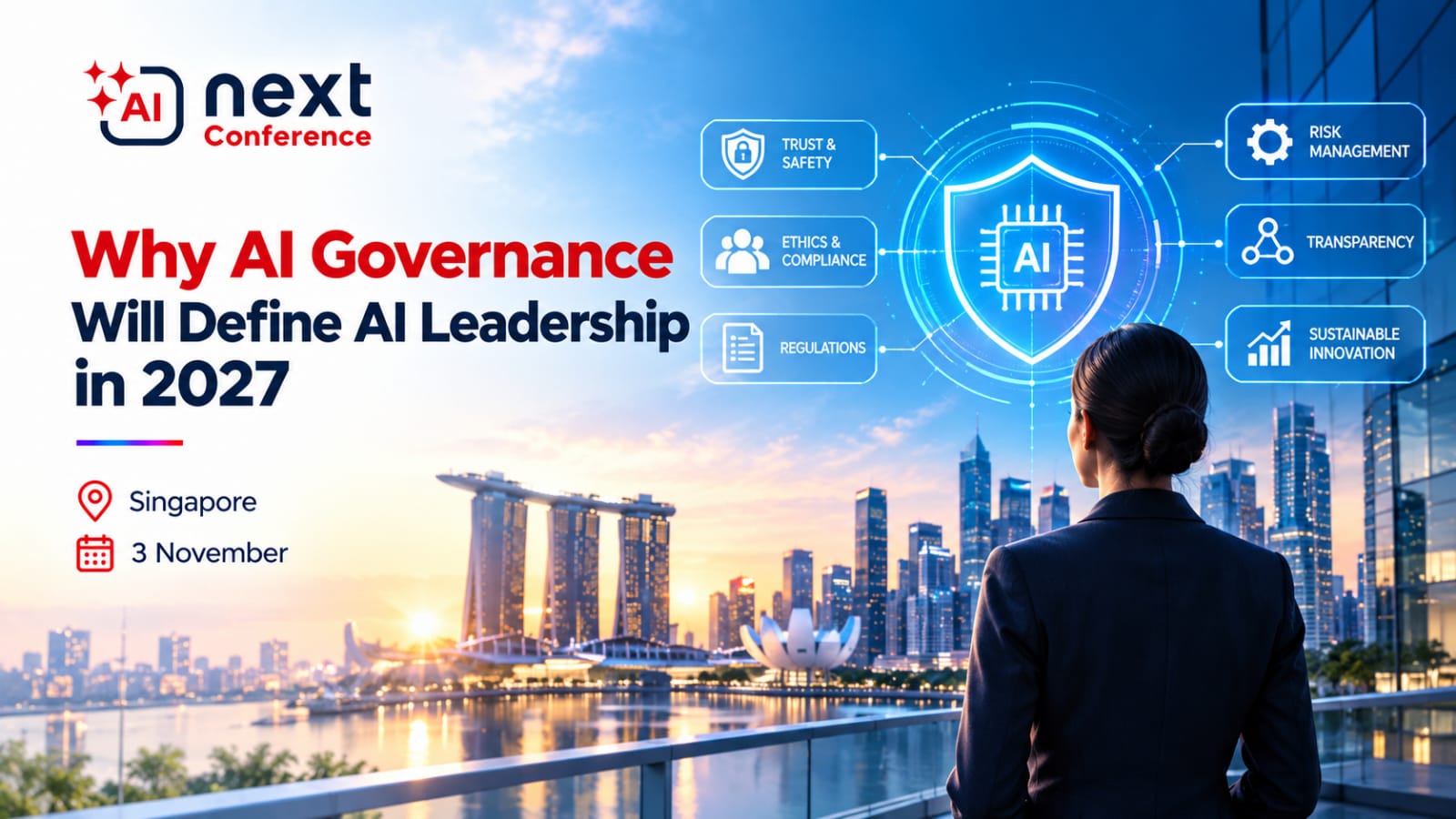
AI regulation is evolving in fragments rather than through one global rulebook. Jurisdictions are using different combinations of legislation, regulator guidance, voluntary standards, and sector-specific supervision to manage the risks of increasingly capable AI systems.
Despite these differences, a common agenda is taking shape: risk-based controls, transparency, human accountability, safety testing, incident response, data governance, cybersecurity, and assurance. Singapore and Hong Kong illustrate this pragmatic approach—using targeted measures and existing regulatory structures to build trust in AI, rather than relying on a single horizontal AI law.
From pilots to production
Enterprises have moved beyond asking whether AI works. They now ask whether it can be trusted with customer data, financial decisions, clinical workflows, and autonomous actions. That shift makes governance a business capability, not a compliance afterthought.
Singapore offers a useful example. Its refreshed National AI Strategy, updated in May 2026, places greater emphasis on trusted AI adoption, stronger layered governance, sector-specific risk management, and capabilities in AI testing, assurance, and safety. Rather than relying solely on broad principles, Singapore is developing practical mechanisms that help organizations deploy AI with greater confidence.
AI Verify is central to this approach. Developed by Singapore’s Infocomm Media Development Authority (IMDA), the AI Verify Testing Framework helps organizations assess AI systems against 11 internationally recognized AI governance principles. It translates principles such as transparency, explainability, safety, security, fairness, data governance, accountability, and human agency and oversight into structured assessment practices.
Governance as competitive advantage
For AI leaders, governance should not be framed as friction. Done well, it can accelerate adoption by reducing uncertainty.
A bank deploying an AI-driven credit model, for example, needs evidence that the system does not amplify bias, can support appropriate explanations for adverse decisions, and remains secure. A healthcare provider using AI for diagnostics needs validation, audit trails, and clear human oversight. In both cases, governance enables deployment by giving regulators, customers, and internal risk teams greater confidence.
Singapore’s Model AI Governance Framework for Agentic AI reflects this reality. As AI agents begin to plan, act, and interact across systems, governance must address not only model outputs but also permissions, autonomy, accountability, and real-world consequences.
The framework was updated in May 2026 with feedback and contributions from more than 50 organizations, including AWS, DBS, Google, and Salesforce. It also includes over 10 new case studies showing how organizations are applying governance practices to agentic AI deployments.
This is the emerging leadership test: not simply Can we build an agent? but Can we govern an agent across departments, partners, and jurisdictions?
Why 2027 will be a turning point for AI governance
Three forces will make governance decisive in 2027.
Agentic AI will scale. Autonomous systems will increasingly take actions, rather than merely generate content, raising the stakes for oversight, permissions, security, and accountability.
Regulators and stakeholders will demand evidence. Principles alone will not be enough. Enterprises will increasingly need testing, assurance, documentation, and demonstrable risk controls.
Trust will become a market differentiator. Customers and business partners will favor AI providers that can demonstrate responsible deployment, privacy, security, and accountability.
Singapore’s approach is instructive because it combines AI innovation with practical guardrails. Its governance ecosystem includes the Model AI Governance Framework for Agentic AI, AI Verify, and other testing and assurance initiatives designed to support responsible AI deployment. Singapore’s latest AI strategy refresh also identifies trusted AI adoption as a core priority, with plans to strengthen governance and testing, assurance, and safety capabilities.
The lesson for global leaders is clear: AI leadership in 2027 will belong to organizations that treat governance as infrastructure—as essential as compute, data, and talent.
Join the conversation at AINext Singapore
Join AI, policy, and enterprise leaders at AINext Awards and Conference Singapore on 3 November 2026 to explore practical governance models for autonomous AI, trusted cross-border deployment, and responsible innovation at scale.
Register for AINext Singapore and help shape the governance agenda for AI leadership in 2027.